Wood Stove and WETT Inspection Rules in Ontario, Explained
WETT certification is not a licence and a WETT inspection is not one fixed thing. Here is what Ontario homeowners and buyers actually need to know before their insurer asks.
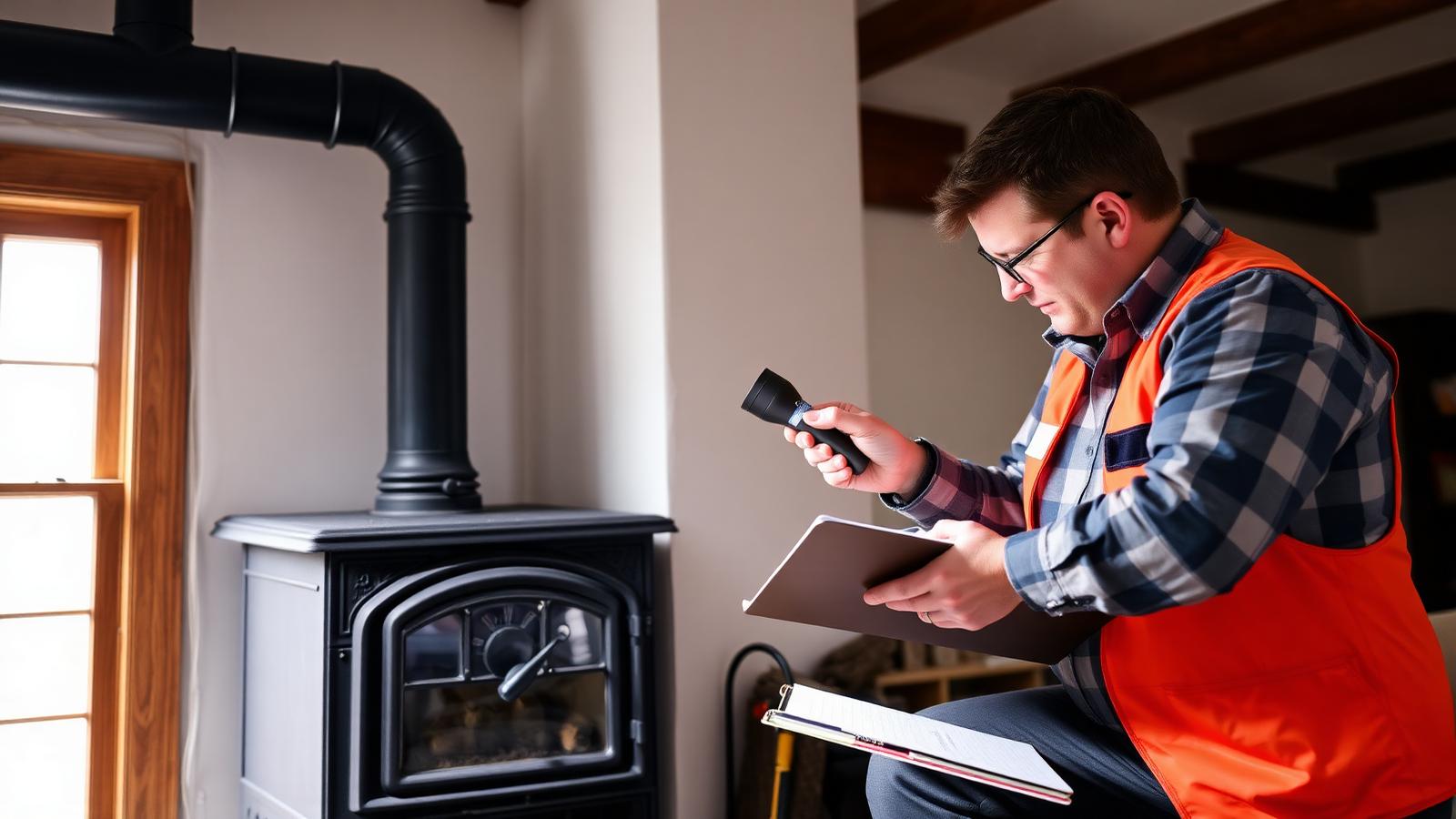
WETT (Wood Energy Technical Training) is a certification standard for solid-fuel appliance installers and inspectors in Canada, not a government licence. In Ontario, most insurance companies require a current WETT inspection report before covering a home with a wood stove, especially at a new policy or home sale. A Level 2 inspection, which includes accessible chimney and connector examination, typically costs $200 to $400 and is the level most insurers ask for.
- WETT certification trains and tests individuals; it is not a government licence and does not replace a building permit or CSA-listed appliance installation.
- Ontario insurers commonly require a Level 2 WETT inspection, costing $200-$400, before issuing or renewing a policy on a home with a wood-burning appliance.
- Standard clearance to combustibles for an unlisted wood stove is 48 inches; a CSA-listed stove with a data plate can be as close as 6-12 inches depending on the model.
- Creosote is classified into three stages, and Stage 3 (glazed, tar-like) is a fire hazard that cannot be fully removed by brushing alone and often requires mechanical or chemical treatment.
- A WETT inspection report is valid at a point in time, not indefinitely - most insurers and real estate transactions in Ontario want one dated within the past 12 months.
- Typical GTA cost (Level 2)
- $200 - $400
- Report validity expected by insurers
- Within the past 12 months
- Standard clearance, unlisted stove
- 48 inches from combustibles
- Standard clearance, CSA-listed stove
- 6 - 12 inches per data plate
- Permit needed
- No provincial licence for WETT itself; installation may need a building permit
- DIY vs pro
- Installation can be DIY; inspection must be by a certified WETT inspector
- Best season
- Before heating season begins (September-October)
What WETT certification actually is
WETT stands for Wood Energy Technical Training. It is a Canadian non-profit organization that trains and certifies individuals - not appliances, not companies - in the safe installation, maintenance and inspection of wood-burning and other solid-fuel heating systems. A WETT-certified technician has passed a written exam and, for higher designations, a practical assessment covering the applicable CSA standards, clearances, and chimney requirements.
It is important to be precise about what this is not. WETT certification is not a government licence, and Ontario does not legally require a WETT-certified person to install a wood stove the way an electrician's licence is legally required for wiring. What actually drives the requirement is insurance: the vast majority of Ontario home insurers will not write or renew a policy on a home with a solid-fuel appliance without a WETT inspection report on file.
Level 1, 2 and 3 inspections: what each one covers
WETT defines three inspection levels, and the scope difference between them is significant. Homeowners are frequently quoted for the wrong level because they did not know which one their situation actually requires.
Level 1: visible and accessible areas only
A Level 1 inspection is a visual review of the appliance, connector pipe and chimney in areas that are readily accessible without removing anything permanent. It is appropriate when there has been no change to the system, no known or suspected damage, and the homeowner simply wants routine confirmation before another heating season. It does not include entering the attic, opening wall cavities, or removing a chimney liner for close examination.
Level 2: the standard for insurance and real estate
A Level 2 inspection includes everything in Level 1 plus examination of accessible portions of the chimney from the attic, basement or crawlspace, and it is usually done with a camera scan of the flue interior. This is the level most Ontario insurers specify by name, and it is also the standard inspection requested during a home sale when a wood stove or fireplace insert is present. Level 2 is required whenever there has been a change - a new appliance, a change of ownership, or if the system has not been inspected in the timeframe the insurer specifies.
Level 3: when damage or a fire is suspected
A Level 3 inspection includes Level 1 and 2 plus removal of components - drywall, flashing, or sections of the chimney chase - to examine areas that cannot otherwise be seen. This level is reserved for situations where a chimney fire has occurred, damage is suspected, or a Level 2 inspection turned up something that needs further investigation. It is the most invasive and most expensive of the three.
| Inspection level | Scope | Typical GTA cost |
|---|---|---|
| Level 1 | Visual review of accessible areas, no camera or component removal | $120 - $200 |
| Level 2 | Level 1 plus attic/crawlspace access and internal flue camera scan | $200 - $400 |
| Level 3 | Level 1 and 2 plus removal of drywall, flashing or chase sections | $500 - $1,200+ |
Insurance company requirements in Ontario
Ontario insurers treat wood-burning appliances as an elevated fire risk, and most now require a WETT inspection report as a condition of coverage rather than a suggestion. This applies at three common points: taking out a new home insurance policy on a house with a wood stove, renewing a policy after the insurer flags an aging system, and after a home sale where the buyer's insurer wants proof of a safe installation before binding coverage.
Insurers generally want the report dated within the last 12 months, and they want to see a pass with no deficiencies, or a pass with deficiencies noted as corrected. A report listing open deficiencies - inadequate clearance, a damaged liner, missing chimney cap - is very likely to be met with a request for remediation before coverage is confirmed, and in some cases an insurer will decline or non-renew a policy until that work is done.
Clearances to combustibles
Clearance is the minimum air gap required between a hot surface (the stove body, the connector pipe) and anything combustible (wood framing, drywall, furniture). Getting this wrong is one of the most common and most dangerous installation errors WETT inspectors find in Ontario homes.
An unlisted stove - one without a manufacturer's data plate specifying reduced clearances, common on older or homemade units - defaults to the conservative clearances in NFPA 211 and the applicable CSA standard, typically 48 inches from an unprotected combustible wall. A CSA-listed stove, tested and rated by its manufacturer, can be installed as close as 6 to 12 inches depending on the specific model and whether wall protection is used, because the manufacturer has proven that clearance safe through testing.
- Never assume a reduced clearance applies without the stove's data plate confirming it for that exact model.
- Heat shields and wall protectors reduce required clearance only when installed exactly to the tested specification, including air gap behind the shield.
- Floor protection (hearth pad) must extend the distance specified by the appliance manufacturer in every direction, not just in front of the loading door.
- Connector pipe clearance to combustibles is almost always greater than the stove's own clearance and is frequently overlooked.
Chimney and liner requirements
A wood stove needs a chimney sized and lined appropriately for that specific appliance, not simply any existing masonry flue. An oversized flue - common when a smaller modern stove is connected to a chimney built for an old furnace or open fireplace - cools flue gases too quickly, which increases creosote formation and can prevent the chimney from drafting properly in cold weather.
A stainless steel liner sized to the stove manufacturer's flue collar specification solves this in most retrofit situations and is one of the most common corrective items WETT inspectors recommend in the GTA. Class A insulated pipe is required for any portion of the chimney system that runs outside the conditioned space, such as through an attic or up an exterior wall.
Creosote classes and why Stage 3 is dangerous
Creosote is the byproduct of incompletely combusted wood smoke condensing on the cooler interior surface of a chimney. It is classified into three stages of increasing severity and increasing difficulty to remove.
| Creosote stage | Appearance | Removal method |
|---|---|---|
| Stage 1 | Dry, flaky, soot-like | Standard brushing during a routine sweep |
| Stage 2 | Flaky with some tar-like patches, harder texture | Brushing plus rotary or chemical assistance |
| Stage 3 | Shiny, glazed, tar-like, hardened | Mechanical/chemical treatment; brushing alone will not remove it |
Stage 3 creosote is a genuine fire hazard because it is highly combustible and burns hot enough in a chimney fire to crack a liner or ignite adjacent framing. It forms fastest when unseasoned or wet wood is burned, when the stove is regularly run at a low smouldering burn instead of a hot clean burn, or when the flue is oversized for the appliance and gases cool too much before exiting.
Installation certificates and home sales
When a home with a wood stove or fireplace insert is sold in Ontario, buyers and their insurers routinely ask for either the original installation certificate or a current Level 2 WETT inspection report, or both. An installation certificate, issued at the time the stove went in, documents that the specific model was installed to its manufacturer's clearance and hearth specifications by a WETT-certified installer.
If that certificate cannot be located, which is common with homes that have changed hands more than once, a fresh Level 2 inspection effectively recreates that documentation and is what most Ontario insurers will accept in its place. Sellers who arrange this ahead of listing tend to avoid a financing or insurance delay in the middle of a closing.
- Locate the original installation certificate and manufacturer's manual if the stove is still the one originally installed.
- If no certificate exists, or the stove has been replaced, book a Level 2 WETT inspection well before listing the home.
- Correct any deficiencies noted in the report before the buyer's insurer sees it.
- Keep the dated report and photos on file for the closing lawyer and the buyer's insurance broker.
Cost summary
| Service | Typical GTA cost |
|---|---|
| Level 1 WETT inspection | $120 - $200 |
| Level 2 WETT inspection (insurance/sale standard) | $200 - $400 |
| Level 3 WETT inspection (invasive) | $500 - $1,200+ |
| Chimney liner installation for wood stove | $1,800 - $4,500 |
| Standard chimney sweep (Stage 1-2 creosote) | $180 - $280 |
| Stage 3 creosote mechanical/chemical removal | $350 - $700 |
How to prepare for a WETT inspection
A little preparation shortens the visit and reduces the chance of the inspector needing a follow-up trip to see something that was blocked or inaccessible on the first visit.
- Clear a path to the attic hatch and any crawlspace access near the chimney.
- Have the stove's manufacturer manual and data plate information ready, or note the model and serial number if you cannot find the manual.
- Locate the original installation certificate if one exists.
- Make sure the stove has cooled and has not been used for at least 12 hours before the visit.
- Clear furniture and stored items away from the hearth area so clearances can be measured accurately.
Straight answers
Short, sourced answers to the questions GTA homeowners ask most about this topic.
What does WETT stand for and what does it certify?
WETT stands for Wood Energy Technical Training, a Canadian organization that certifies individuals in the safe installation, maintenance and inspection of wood-burning and solid-fuel heating systems. WETT certification applies to people, not to appliances or companies, and it is not a government-issued licence.
What is the difference between a Level 1 and Level 2 WETT inspection?
A Level 1 WETT inspection covers only visible and readily accessible parts of the appliance and chimney, while a Level 2 inspection adds attic and crawlspace access plus an internal camera scan of the flue. Ontario insurers and real estate transactions typically require Level 2 as their standard.
Do Ontario insurance companies require WETT inspections?
Most Ontario home insurance companies require a current WETT inspection report, usually Level 2, before insuring a home with a wood-burning appliance. This applies when taking out a new policy, at certain renewals, and when a home with a wood stove changes ownership.
What clearance does a wood stove need from a combustible wall?
An unlisted wood stove without a manufacturer's data plate requires 48 inches of clearance from an unprotected combustible wall under NFPA 211 and applicable CSA standards. A CSA-listed stove can be installed as close as 6 to 12 inches, depending on the specific model's tested rating.
What are the three stages of creosote?
Creosote forms in three stages: Stage 1 is dry, flaky and soot-like and removes with standard brushing; Stage 2 has harder, tar-like patches needing rotary or chemical assistance; Stage 3 is a shiny, glazed, hardened deposit that is a fire hazard and cannot be removed by brushing alone.
Do I need a chimney liner for a wood stove?
A wood stove needs a flue sized to its manufacturer's flue collar specification, and in most retrofit situations connecting a modern stove to an older masonry chimney, that means installing a stainless steel liner. An oversized, unlined flue cools exhaust gases too quickly and accelerates creosote buildup.
Do I need a WETT inspection to sell a house with a wood stove in Ontario?
Most buyers and their insurers in Ontario will request either the original installation certificate or a current Level 2 WETT inspection report before finalizing insurance coverage on a home sale. Sellers who obtain this ahead of listing typically avoid delays at closing.
How much does a WETT inspection cost in the GTA?
A Level 1 WETT inspection in the GTA typically costs $120 to $200, a Level 2 inspection costs $200 to $400, and a Level 3 inspection involving component removal runs $500 to $1,200 or more depending on scope.
60-minute callback. No obligation. GTA-wide.
Frequently asked questions
Is a WETT inspection legally required in Ontario?
There is no provincial law requiring one, but most home insurance companies in Ontario make a WETT inspection a condition of covering a home with a wood-burning appliance, which makes it effectively mandatory for insurance purposes.
How long is a WETT inspection valid for?
There is no fixed legal expiry, but most Ontario insurers and real estate transactions want a report dated within the past 12 months, and some ask for a fresh inspection at every policy renewal cycle.
Can I install my own wood stove without a WETT-certified installer?
Yes, homeowners can legally install their own wood stove in Ontario, but the installation still needs to meet manufacturer clearances and applicable code, and most insurers will still require a Level 2 WETT inspection afterward to confirm it was done correctly.
Does a pellet stove need a WETT inspection?
Yes, WETT certification covers solid-fuel appliances broadly, which includes pellet stoves, wood-burning fireplace inserts, and outdoor wood boilers, not just freestanding wood stoves.
What happens if my WETT inspection finds deficiencies?
The report lists each deficiency with the applicable code or standard reference. You then arrange the corrective work, and most inspectors will re-verify the fix, sometimes at reduced cost, so the final report shows a pass before it goes to your insurer.
How much does a chimney liner for a wood stove cost in the GTA?
A stainless steel liner sized for a wood stove typically costs $1,800 to $4,500 installed in the GTA, depending on chimney height, liner diameter and whether insulation wrap is required.
Can a masonry chimney be used for a wood stove without a liner?
Only if the existing flue is already correctly sized and in good condition for the specific stove being connected, which an inspection needs to confirm. Many older masonry flues are oversized or deteriorated and require a liner before a wood stove can be safely connected.
Who performs a WETT inspection in the GTA?
A technician holding a current WETT Inspector certification performs the inspection. Confirm certification status directly through WETT's public registry before booking, since certification does expire and must be renewed.
Written by The Diamond Home Services Team — WETT-trained wood stove and chimney inspectors - Toronto & the GTA. Last fact-checked .
- WETT (Wood Energy Technical Training) — Certification body and standard for solid-fuel appliance installers and inspectors
- NFPA 211 — Standard for chimneys, fireplaces, vents and solid fuel-burning appliances
- CSA B365 — Installation code for solid-fuel-burning appliances and equipment
- Ontario Building Code — Governs permit requirements for solid-fuel appliance installations
Book this service in your area
Keep reading
- Cost GuideHow Much Does a Chimney Liner Cost in Toronto? (2026 Pricing)
What a chimney liner actually costs in Toronto in 2026, why a 1950s masonry chimney almost always needs one, and how to tell a fair relining quote from a lowball or a scare tactic.
- ChimneyChimney Repointing and Brick Repair: When It Is Urgent (GTA)
Crumbling mortar, flaking brick faces and a cracked crown are not always emergencies, but sometimes they are. Here is how a GTA mason tells the difference and what each repair level costs.
- Homeowner GuideDo I Need a Permit? GTA Rules for Chimney, Roof and Venting Work
A clear answer to whether your roof, chimney or venting project needs a municipal permit or a TSSA-registered contractor, with real fee ranges and the resale risk of skipping the paperwork.