
Roof Replacement Cost in the GTA: Shingles vs Metal vs Flat (2026)
What a full roof replacement actually costs across Toronto, Mississauga and Vaughan in 2026 - shingles, metal and flat membrane compared, plus the code requirements that change your quote.
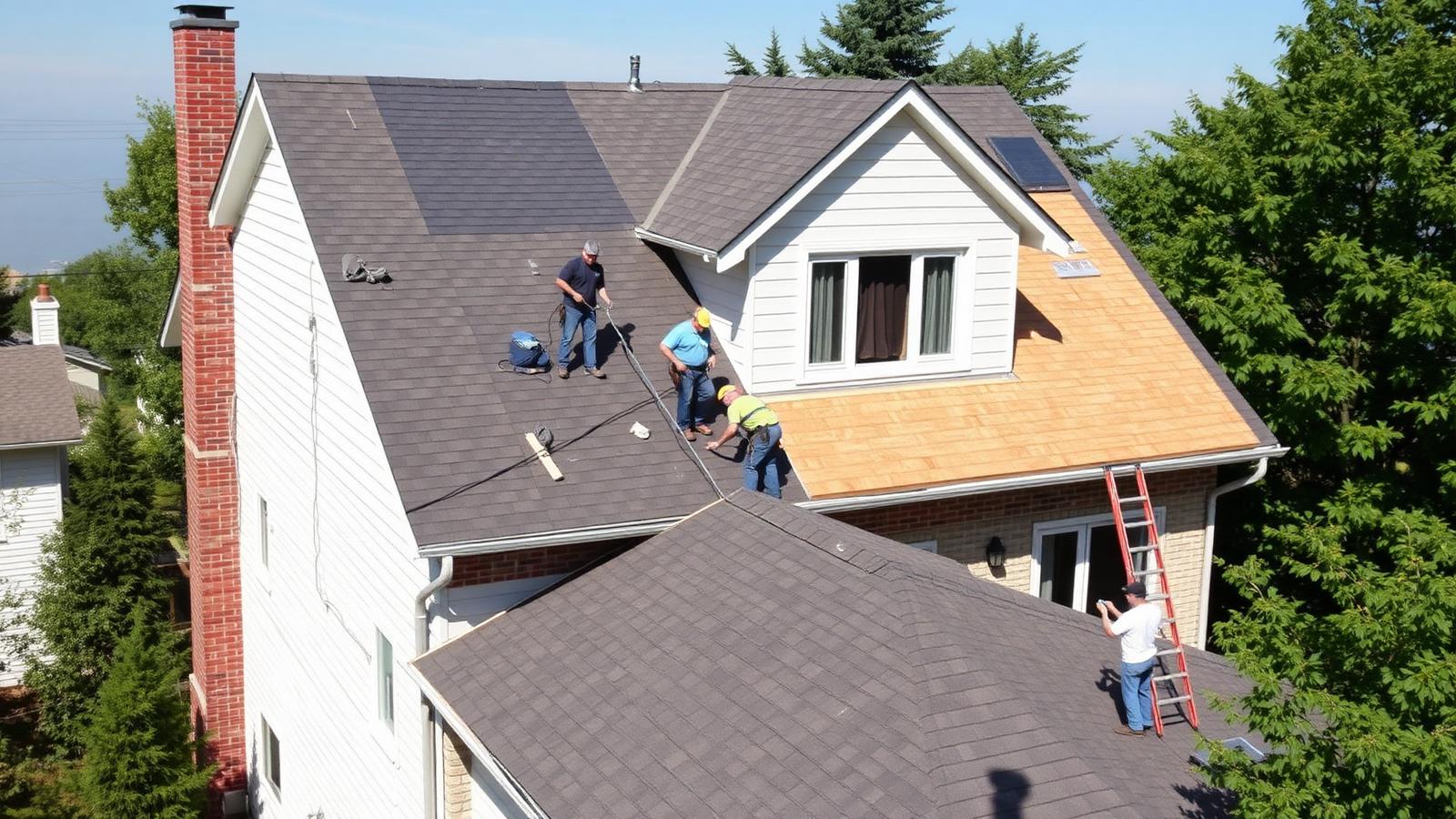
A full roof replacement in the GTA costs $6,500 to $13,500 for asphalt shingles on an average 1,800-2,200 sq ft detached home, $16,000 to $28,000 for standing-seam metal, and $8,000 to $16,000 for a flat membrane roof on the same footprint. Price depends on roof pitch, number of layers being torn off, decking condition and how much ice and water shield the Ontario Building Code requires along your eaves and valleys.
- Asphalt shingles run $4.50-$7.50 per sq ft installed in the GTA; standing-seam metal runs $11-$18 per sq ft; flat membrane runs $6-$11 per sq ft.
- A typical 1,800-2,200 sq ft detached roof (2,200-2,800 sq ft of actual roof surface with pitch) lands between $6,500 and $13,500 for shingles.
- Tear-off of a second layer adds $1.00-$1.75 per sq ft; rotted decking replacement adds $75-$110 per sheet on top of that.
- Ontario Building Code requires ice and water shield extending at least 900 mm (about 3 ft) up-slope from the eave edge measured from the interior wall line in most GTA municipalities.
- Most GTA roofers book 6-10 weeks out in September and October; late fall and winter installs can run 10-20% higher due to weather delays and material handling.
- Typical GTA cost (asphalt, detached)
- $6,500 - $13,500
- Typical GTA cost (metal, detached)
- $16,000 - $28,000
- Typical GTA cost (flat membrane)
- $8,000 - $16,000
- Timeline on site
- 1-3 days shingles, 3-6 days metal, 1-2 days flat
- Permit needed
- Yes in most GTA municipalities for full replacement
- DIY vs pro
- Professional only - fall risk and warranty voiding
- Best season to book
- Late spring and early summer for best pricing and scheduling
What a GTA roof replacement actually costs in 2026
Roofing quotes swing wildly across the GTA because homeowners are often comparing apples to oranges - one number includes a full tear-off to bare decking with new ice and water shield, and the other is a cheaper overlay that skips half the work. Before you compare two quotes, make sure they cover the same scope. Below are real 2026 ranges for the three roofing systems we install most often in Toronto, Mississauga, Brampton and Vaughan.
| Roofing material | Cost per sq ft installed | 1,800 sq ft house (est. roof area 2,400 sq ft) |
|---|---|---|
| 3-tab asphalt shingle | $4.00 - $5.50 | $9,600 - $13,200 |
| Architectural (laminate) asphalt shingle | $4.50 - $7.50 | $10,800 - $18,000 |
| Standing-seam steel or aluminum | $11.00 - $18.00 | $26,400 - $43,200 |
| Metal shingle / stone-coated steel | $9.00 - $14.00 | $21,600 - $33,600 |
| Modified bitumen (flat/low-slope) | $6.00 - $9.00 | $14,400 - $21,600 |
| TPO or EPDM membrane (flat/low-slope) | $6.50 - $11.00 | $15,600 - $26,400 |
Typical Toronto, Mississauga and Vaughan house sizes and what they cost
Housing stock varies enough across the GTA that a single per-square-foot number is not that useful on its own. Toronto's older semis and bungalows in Scarborough and Etobicoke tend to have simple gable roofs under 2,000 sq ft of surface. Mississauga and Brampton's 1990s-2000s two-storey subdivisions run larger, often 2,400-3,200 sq ft with more hips and valleys. Vaughan and Richmond Hill's newer executive homes frequently exceed 3,500 sq ft of roof surface with multiple roof planes, turrets and dormers that add labour independent of material cost.
| Home type | Approx. roof surface | Asphalt shingle estimate |
|---|---|---|
| Toronto semi or bungalow | 1,400 - 1,900 sq ft | $6,300 - $10,500 |
| Mississauga/Brampton 2-storey (2000s) | 2,400 - 3,000 sq ft | $10,800 - $19,500 |
| Vaughan/Richmond Hill executive home | 3,200 - 4,500 sq ft | $14,400 - $27,000 |
| Condo townhouse (shared roof section) | 900 - 1,300 sq ft | $4,050 - $8,450 |
Tear-off vs overlay: why one costs more and lasts twice as long
An overlay means nailing new shingles directly over the existing layer. It is cheaper up front - typically $1.50-$2.50 per sq ft less than a tear-off - because there is no disposal and less labour. It is also, in almost every case, the wrong call on a GTA home. The Ontario Building Code allows a maximum of two layers of asphalt shingles on most residential roofs, so if your home already has one layer, an overlay uses up your last option and hides the deck from inspection.
A tear-off strips the roof to bare decking, lets the crew inspect and replace rotted sheathing, and allows a full, code-compliant ice and water shield installation instead of relying on whatever underlayment is already there. Every reputable GTA roofer will tell you the same thing: overlays trap heat, void most manufacturer warranties, and typically fail 5-10 years earlier than a proper tear-off and reroof.
Decking replacement: the line item that changes everything
Roof decking (sheathing) in GTA homes built before the 1990s is often 1x6 board decking rather than plywood or OSB sheets, and it hides rot at nail lines and around old vent penetrations that nobody sees until the old shingles come off. Expect the crew to flag some amount of decking replacement on almost any tear-off over 20 years old.
| Decking issue | Typical GTA cost | Notes |
|---|---|---|
| Spot repair, 1-3 sheets (4x8 plywood/OSB) | $225 - $450 | Common around old plumbing vents |
| Moderate replacement, 4-10 sheets | $600 - $1,650 | Typical for a 25+ year old roof |
| Full deck replacement | $2.50 - $4.00 per sq ft | Rare, usually chronic ice-damming or leak history |
| Board-to-plywood conversion (full roof) | $3.50 - $5.50 per sq ft | Common on pre-1970s Toronto housing stock |
Ice and water shield: an Ontario-specific requirement, not an upsell
GTA winters produce ice damming - snow melts from attic heat loss, refreezes at the cold overhang, and backs water up under shingles. The Ontario Building Code addresses this directly by requiring a self-adhering ice and water membrane along eaves, extending from the edge of the roof to at least 900 mm up-slope past the interior face of the exterior wall. On a shallow-pitch roof or one with a wide overhang, that distance up-slope can be considerably more than 900 mm measured along the roof surface.
- Full eave coverage per OBC minimum, priced into every legitimate GTA quote.
- Valleys - the single highest-volume water path on any multi-plane roof, always fully membraned.
- Around chimneys, skylights and all roof penetrations, extending at least 300 mm beyond the flashing on each side.
- Low-slope sections under 4:12 pitch, which often get full-surface ice and water shield rather than just the eave strip.
Attic ventilation: the part most homeowners never see
A roof is only as good as the attic underneath it. Ridge vents, soffit intake vents and baffles work together to keep the underside of the deck cold in winter (reducing ice damming) and to exhaust heat and moisture in summer (extending shingle life). Most manufacturer warranties on architectural shingles explicitly require balanced intake and exhaust ventilation to remain valid, and a roofer replacing shingles without checking the attic's net free ventilation area is setting the new roof up to underperform its rating.
Adding or upgrading ridge venting during a reroof typically costs $8-$14 per linear foot, and clearing or adding soffit intake vents runs $150-$450 depending on how many bays need baffles installed. On a home with visible attic frost or ice damming history, this is not optional work - it is the fix.
Warranty types: material, workmanship and what actually protects you
Roofing warranties come in layers that homeowners often assume are one thing. Reading the fine print before signing matters more than the headline number on the brochure.
| Warranty type | Typical coverage | What voids it |
|---|---|---|
| Manufacturer material warranty | 25 - 50 years (limited, prorated after 10-15 yrs) | Improper ventilation, non-approved installer, overlay installs |
| Manufacturer workmanship warranty (enhanced) | 10 - 25 years, requires certified installer | Using a non-certified contractor for install |
| Contractor labour warranty | 2 - 10 years, varies by company | Contractor going out of business, unpermitted work |
| Metal roof finish warranty | 30 - 40 years against fade/chalk | Coastal-grade salt exposure (rare in GTA), physical damage |
Permit rules across the GTA
Most GTA municipalities, including Toronto, Mississauga, Brampton and Vaughan, do not require a permit for a like-for-like reroof (same footprint, same roof lines, no structural change). A permit is generally required when the scope includes structural repair, a change in roof shape or pitch, converting a flat roof to a sloped one, or adding a dormer or skylight that alters framing. A licensed roofer pulls the permit themselves as part of the job when it is needed and includes the fee in the quote.
Seasonal pricing across the GTA roofing calendar
Roofing is seasonal work, and pricing moves with demand. Spring and early summer (May-June) tend to have the most competitive pricing and best availability because crews are ramping up after winter and before the fall rush. September and October are the busiest months in the GTA - everyone wants a new roof before winter - and booking windows stretch to 6-10 weeks with less room to negotiate. Winter installs are possible but limited to milder days, cost more due to slower material handling and heated storage, and are usually reserved for emergency leak repairs rather than full replacements.
Comparing quotes: a side-by-side worksheet
The single biggest mistake GTA homeowners make is comparing the bottom-line number on three quotes without checking whether they include the same scope. Use a table like this to line up what you actually received.
| Line item | Quote A | Quote B | Quote C |
|---|---|---|---|
| Tear-off or overlay | ? | ? | ? |
| Layers being removed | ? | ? | ? |
| Decking inspection/replacement allowance | ? | ? | ? |
| Ice and water shield coverage (ft up-slope) | ? | ? | ? |
| Underlayment type (felt vs synthetic) | ? | ? | ? |
| Ventilation upgrade included | ? | ? | ? |
| Flashing replacement (chimney, valleys, walls) | ? | ? | ? |
| Manufacturer + workmanship warranty terms | ? | ? | ? |
| Permit included and pulled by contractor | ? | ? | ? |
| Cleanup and magnetic nail sweep included | ? | ? | ? |
Getting a firm number for your home
An accurate roofing quote requires an on-site measurement, not a satellite estimate. Roof pitch, number of layers, decking condition and ventilation all change the final number, and a technician needs to walk the roof and the attic to confirm them. Book an on-site assessment before your existing roof starts leaking, since emergency replacements in the GTA cost more and leave less room to choose material or scheduling.
Straight answers
Short, sourced answers to the questions GTA homeowners ask most about this topic.
How much does a roof replacement cost in Toronto?
A roof replacement in Toronto typically costs $6,500 to $13,500 for asphalt shingles on an average detached home, $16,000 to $28,000 for standing-seam metal, and $8,000 to $16,000 for a flat membrane roof. Price depends on roof surface area, pitch, number of existing layers being torn off and decking condition.
Is it cheaper to overlay a roof instead of a full tear-off?
An overlay costs $1.50-$2.50 per sq ft less than a tear-off, but the Ontario Building Code limits residential roofs to two shingle layers, an overlay hides the deck from inspection, and it typically voids manufacturer warranties. Most GTA roofers recommend tear-off over overlay in almost every case.
How much ice and water shield is required on an Ontario roof?
The Ontario Building Code requires self-adhering ice and water shield extending at least 900 mm up-slope from the eave edge, measured from the interior face of the exterior wall. Valleys and all penetrations such as chimneys and skylights also require full membrane coverage under Ontario code.
Do I need a permit to replace my roof in the GTA?
Most GTA municipalities do not require a permit for a like-for-like roof replacement with no structural or shape changes. A permit is generally required for structural repair, a pitch or shape change, or converting a flat roof to a sloped one, and a licensed roofer typically pulls it as part of the job.
What is the difference between architectural and 3-tab asphalt shingles?
Architectural (laminate) shingles are thicker, layered products that cost $4.50-$7.50 per sq ft installed and typically carry 25-30 year warranties with a heavier wind rating. 3-tab shingles are a single flat layer costing $4.00-$5.50 per sq ft with shorter 15-20 year warranties, and they are increasingly rare on new GTA installs.
How much does a metal roof cost compared to shingles in the GTA?
Standing-seam metal roofing costs $11-$18 per sq ft installed in the GTA, roughly two to three times the cost of architectural asphalt shingles at $4.50-$7.50 per sq ft. Metal roofing typically lasts 40-60 years compared to 20-25 years for shingles, which narrows the lifetime cost gap considerably.
What causes ice damming on GTA roofs?
Ice damming happens when attic heat loss melts snow on the upper roof, the meltwater runs down and refreezes at the colder overhang, and the resulting ice dam forces water back under the shingles. Balanced attic ventilation and Ontario Building Code-compliant ice and water shield along the eaves are the two primary defences.
How long does a typical asphalt shingle roof last in the GTA?
An architectural asphalt shingle roof typically lasts 20-25 years in the GTA climate, though poor attic ventilation, an overlay installation, or steep south-facing exposure can shorten that to 15-18 years. Standing-seam metal and quality flat membrane systems both last significantly longer.
60-minute callback. No obligation. GTA-wide.
Frequently asked questions
How long does a roof replacement take in the GTA?
A standard detached home takes 1-3 days for asphalt shingles, 3-6 days for standing-seam metal, and 1-2 days for a flat membrane roof, weather permitting.
Can I replace my roof in winter?
Yes, but only on milder days above roughly -10C for shingle sealing to work properly. Winter jobs cost more and are usually reserved for leak emergencies rather than full replacements booked in advance.
Does home insurance cover roof replacement?
Only if the damage is sudden and covered, such as wind or hail. Age-related wear, ice damming from poor ventilation, or a roof simply reaching the end of its lifespan is considered maintenance and is not covered.
How do I know if I need a new roof or just a repair?
Widespread granule loss, curling shingles across multiple slopes, more than two or three active leak points, or a roof over 20 years old with recurring issues all point to replacement being more cost-effective than continued repairs.
What is the lifespan difference between shingles and metal?
Architectural asphalt shingles typically last 20-25 years in the GTA climate, while standing-seam metal roofing typically lasts 40-60 years, which is the main reason metal costs more up front but less per year of service.
Do I need to be home during the reroof?
No, but someone should be reachable by phone in case the crew finds unexpected decking damage and needs approval before proceeding with additional repair work.
Will a new roof lower my energy bills?
Improved attic ventilation and a properly sealed roof reduce heat loss in winter and heat gain in summer, but the roofing membrane itself has a smaller effect than attic insulation levels on overall energy costs.
How many quotes should I get?
Three is the practical minimum for a full roof replacement, enough to compare scope and pricing without dragging the process out for weeks during peak season.
What happens to the old shingles?
They are loaded into a disposal bin or trailer on site and taken to a licensed shingle recycling or disposal facility; several GTA facilities now recycle asphalt shingles into road-paving material.
Written by The Diamond Home Services Team — Roofing estimators and installers - Toronto & the GTA. Last fact-checked .
- Ontario Building Code — Roof underlayment, ice and water protection and ventilation requirements (Div. B)
- City of Toronto Building Permits — Permit requirements for roofing and structural roof work
- CSA A123 series — Standards for asphalt shingles and roofing membranes used in Canada
- CSA O325 — Standard for construction sheathing including roof decking materials
Book this service in your area
Keep reading
- RoofingFascia and Soffit Repair: Cost, Warning Signs and Contractor Checklist (GTA)
Fascia and soffit look like trim but they carry your gutters and ventilate your attic. Here is what fails, why, what it costs to fix in the GTA, and how to hire it out properly.
- GuttersEavestrough and Downspout Sizing for Toronto Rainfall (Complete Guide)
Most eavestrough failures in Toronto are sizing failures, not material failures. Here is the actual math behind 5-inch vs 6-inch gutter and 2x3 vs 3x4 downspouts, and what Toronto's rainfall intensity means for your roof.
- Homeowner GuideDo I Need a Permit? GTA Rules for Chimney, Roof and Venting Work
A clear answer to whether your roof, chimney or venting project needs a municipal permit or a TSSA-registered contractor, with real fee ranges and the resale risk of skipping the paperwork.