
11 Signs Your Dryer Vent Is Blocked (and What to Do Today)
Most blocked ducts announce themselves weeks before anything goes wrong. Here is what to look for, how to confirm it in five minutes, and the two symptoms that mean stop the dryer now.
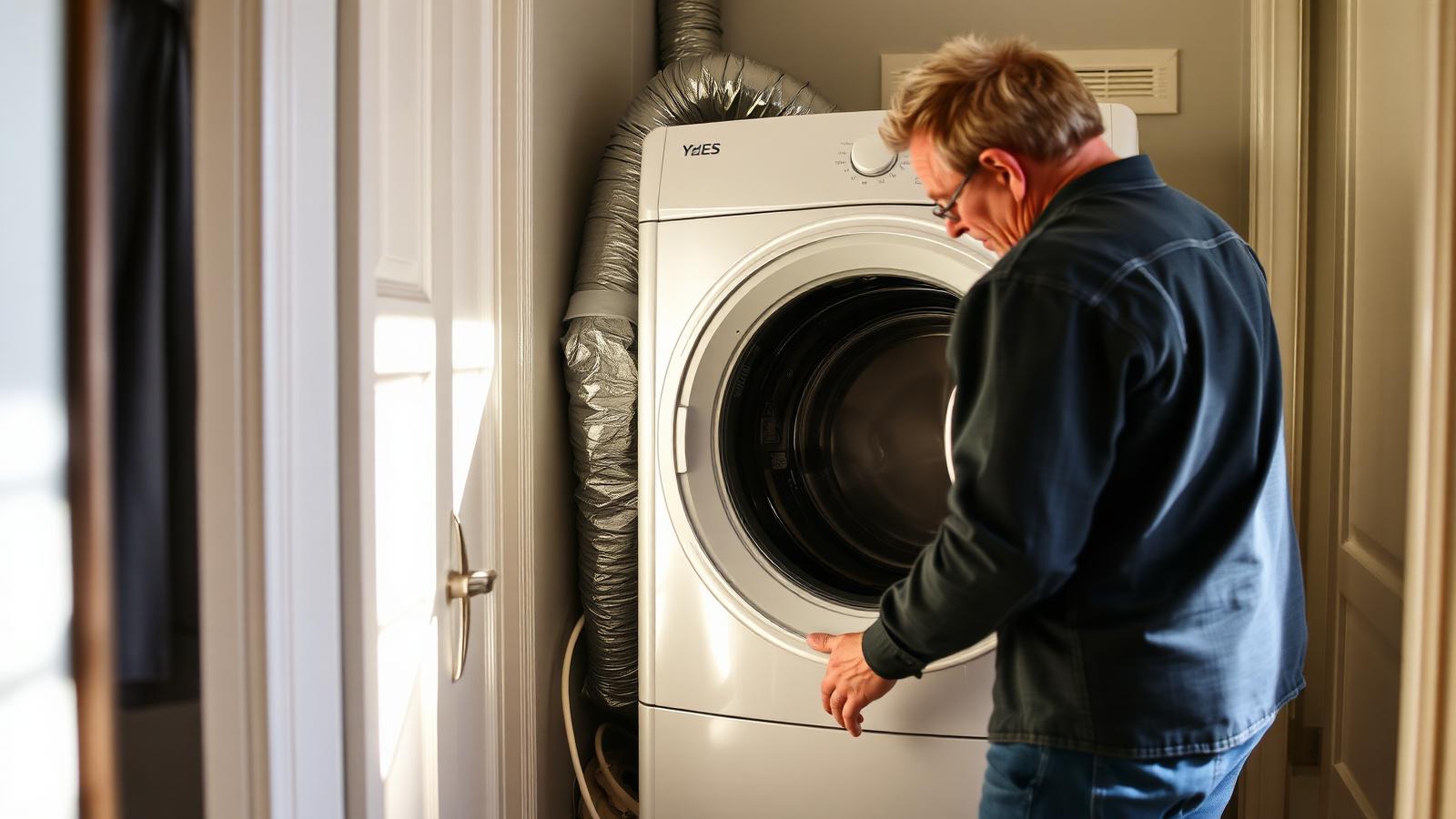
The clearest signs of a blocked dryer vent are loads that need more than one cycle to dry, a hot laundry room or hot clothes at the end of a cycle, weak or no airflow at the outside hood, lint around the exterior vent, and a burning smell. A burning smell or a dryer shutting off mid-cycle means stop using it and have the duct cleared.
- Longer dry times are the earliest and most reliable warning - restriction shows up in the cycle before it shows up anywhere else.
- Go outside during a cycle and hold your hand at the hood. Weak airflow there confirms a restriction faster than any indoor check.
- A burning or hot-dust smell, or a dryer that shuts down mid-cycle and restarts once cool, means stop using the dryer until the duct is cleared.
- Lint visible at or below the exterior hood means the duct is full enough that it is pushing lint out in clumps.
- Crushed foil or white vinyl transition duct behind the dryer is the most common blockage point and the easiest one to fix.
The 11 signs, from earliest to most urgent
1. Loads take more than one cycle
This is the first symptom and the one homeowners normalise fastest. A healthy dryer finishes a regular load in 35 to 50 minutes. When you start hitting the button twice, airflow has dropped enough that the machine cannot carry moisture out of the drum. Nothing else about the dryer has changed - the duct has.
2. The laundry room gets hot and humid
Exhaust that cannot leave the house ends up in the room. If the space is noticeably warmer or the air feels damp after a load, heat and moisture are backing up through the transition duct joints instead of exiting at the hood.
3. Clothes come out hot rather than dry
Hot but still damp is the classic restricted-airflow signature. The heating element is working fine; the air carrying that heat is not moving fast enough to remove the water.
4. The top of the dryer is hot to the touch
A dryer cabinet should be warm, not uncomfortable to touch. Heat concentrating in the appliance means it is not being carried out of the duct.
5. No airflow at the outside hood
During a cycle you should feel a strong, steady, warm stream at the exterior vent, and the damper flaps should be pushed open. A weak breeze, or flaps that barely move, means the restriction is real and measurable.
6. Lint around the exterior vent
Small amounts of lint at the hood are normal. Clumps caught on the flaps, tufts on the wall below, or lint on the ground mean the duct is packed enough to be shedding material out the end.
7. The damper flaps stay shut, or are missing
Flaps glued closed by lint and moisture make the whole system a dead end. Missing flaps are their own problem - that is how birds and rodents get into GTA ducts each spring, and a nest can shut a duct completely in days.
8. Musty or damp-smelling laundry
Moisture that cannot exit condenses inside the duct. That damp lint develops an odour, and the next cycle pulls it back through the load.
9. Excess lint on the clothes themselves
When air is not moving, lint that should be captured by the screen or carried out the duct settles back onto the load.
10. The dryer shuts off mid-cycle
Modern dryers have a thermal cut-out that trips when the internal temperature runs too high. A dryer that stops mid-cycle and works again once cool is telling you plainly that it is overheating. Repeated trips eventually blow the thermal fuse, which is a $180 to $320 service call in the GTA - on a machine whose duct still has not been cleaned.
11. A burning or hot-dust smell
This is the last warning. It means lint is sitting against hot components. Stop the cycle, unplug the dryer or shut off the gas, and do not run it again until the duct and the appliance area have been cleared.
The five-minute self-check
- Start the dryer on a normal heat cycle with a small damp load.
- Go outside and find the exterior hood. Hold your hand about six inches from it. You should feel a strong, warm, steady stream and see the flaps held open.
- Look at the hood itself: are the flaps clean and free, or matted with lint? Is there lint on the siding or ground below?
- Back inside, pull the dryer forward and look at the transition duct. It should be rigid or semi-rigid metal, not white vinyl or thin foil, and it should not be crushed, kinked or sagging behind the appliance.
- Put your hand on the dryer cabinet at the end of a cycle. Warm is fine. Too hot to hold comfortably is not.
Where GTA ducts actually block
- The transition duct behind the appliance, crushed by pushing the dryer back to the wall.
- The first elbow after the appliance, where turbulent air drops its lint load.
- The exterior hood and backdraft damper, where moisture binds lint into a mat.
- Inline booster fans on long townhouse and condo runs.
- Roof and soffit terminations, where bird nests and vertical lint packs form.
- Long horizontal runs under a finished basement ceiling, which sag between supports and collect lint at each low point.
Only the first of those is reachable from your laundry room. The rest need a rotary brush fed the full length of the duct with a HEPA vacuum capturing at the source, plus an airflow reading before and after to prove the restriction is gone.
What to do next
If you ticked one or two of the early signs, book a cleaning at your convenience and put the system back on an annual schedule. If you ticked a burning smell or a mid-cycle shutdown, stop using the dryer and get the duct cleared first. Either way, ask for the before and after airflow readings so you have proof and a baseline for next year.
60-minute callback. No obligation. GTA-wide.
Frequently asked questions
What are the signs of a blocked dryer vent?
Loads needing more than one cycle, a hot or humid laundry room, hot but still damp clothes, weak airflow at the exterior hood, lint around the outside vent, musty laundry, a dryer shutting off mid-cycle, and a burning smell.
Is a blocked dryer vent dangerous?
Yes. Restricted airflow makes the appliance run hotter than designed with lint - a highly combustible material - sitting against hot components. A burning smell or repeated mid-cycle shutdowns mean stop using the dryer until the duct is cleared.
Can I unblock a dryer vent myself?
You can replace crushed transition duct behind the dryer and clear lint from the exterior hood. Blockages at elbows, booster fans, roof terminations or deep in the run need a full-length rotary brush with vacuum capture.
Why is my dryer taking two cycles to dry clothes?
Almost always duct restriction. The heating element still works, but airflow is too weak to carry moisture out of the drum, so the load stays damp while the machine runs hotter and longer.
Why does my laundry smell musty after drying?
Moisture that cannot exit condenses in the duct and soaks the lint sitting there. The next cycle pulls that damp air back through the load.
Could a bird nest be blocking my vent?
Yes, especially where the damper flaps are missing or jammed open. Roof and soffit terminations in the GTA get nested in spring, and a nest can close a duct within days.
How fast can someone come out?
We hold same-week slots across the GTA and prioritise urgent calls - burning smell or a dryer shutting off mid-cycle - for same or next day.
Book this service in your area
Keep reading
- Dryer VentDryer Vent Cleaning Cost in Toronto & the GTA (2026 Prices)
A straight answer on dryer vent cleaning prices in the GTA, what makes one quote $149 and the next $399, and the questions that stop an upsell before the van arrives.
- Dryer VentHow Often Should You Clean a Dryer Vent? A GTA Homeowner's Guide
The honest answer is not one number. Duct length, household size and whether your laundry is on the third floor move the interval from six months to three years.