
How Often Should You Clean a Dryer Vent? A GTA Homeowner's Guide
The honest answer is not one number. Duct length, household size and whether your laundry is on the third floor move the interval from six months to three years.
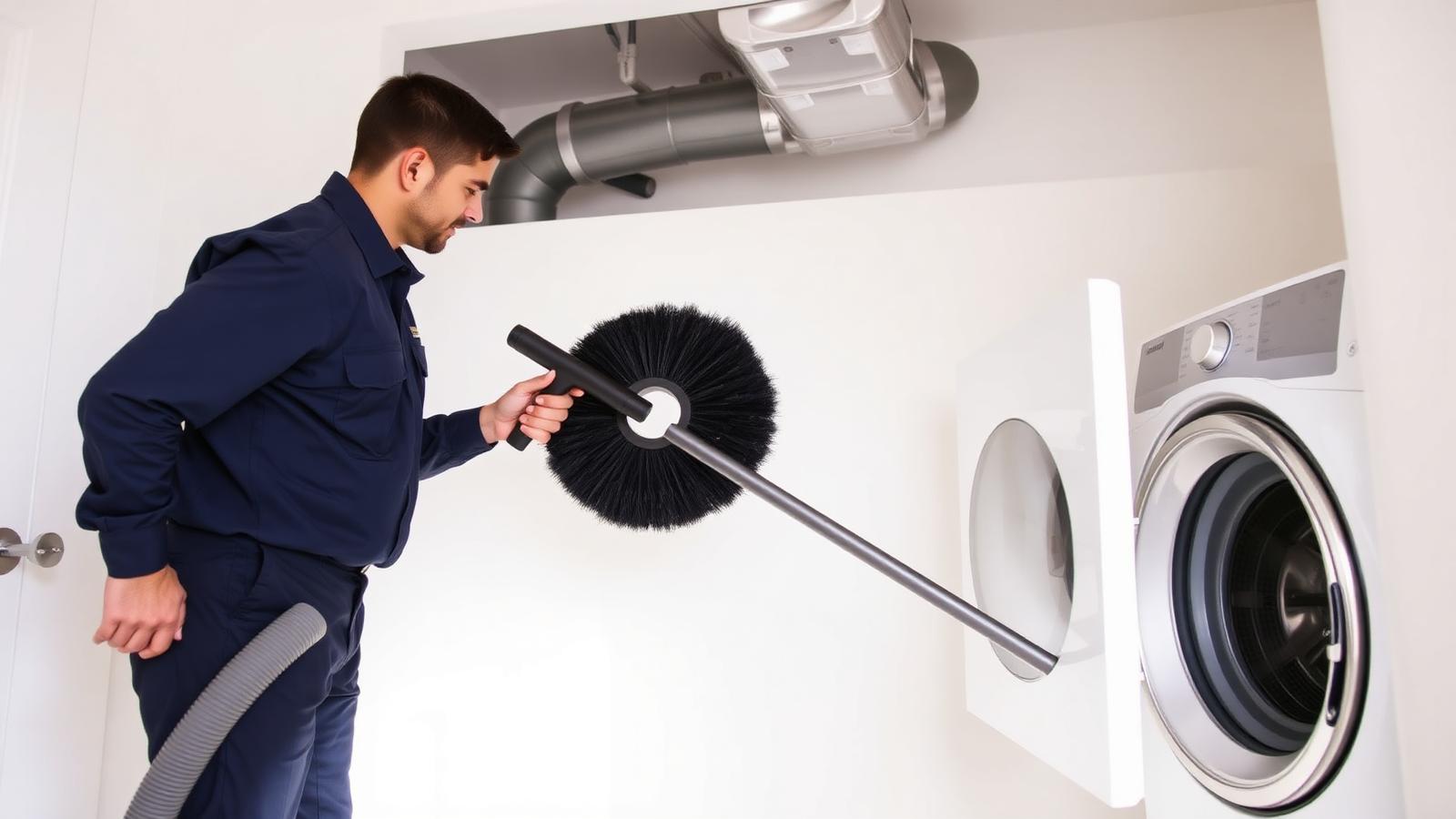
Clean a dryer vent once a year in most GTA homes. Households of four or more, homes with pets, and condo or townhouse runs longer than 20 feet should clean every 6 to 12 months. A two-person household with a short ground-floor duct can stretch to every 18 to 24 months if airflow stays strong.
- Annual cleaning is the default for GTA single-family homes. Duct length and load volume are what move the interval, not the age of the dryer.
- Long condo and multi-storey townhouse runs need service every 6 to 12 months - they restrict roughly twice as fast as a short rear-wall duct.
- Pets and heavy bedding loads shorten the interval more than most homeowners expect; fine hair packs the duct wall rather than blowing through.
- Late summer and early fall is the right time to book in Ontario, before the heating season and before cold-weather damper freeze-up.
- Dry time is the practical trigger: when a normal load needs more than one cycle, the duct is already restricted regardless of the calendar.
The baseline answer: once a year
For a typical GTA detached or semi-detached home running five to eight loads a week through a duct under 20 feet, once a year is the right interval. That schedule keeps airflow near the dryer's design rate, keeps dry times to a single cycle, and keeps lint from compacting into the plug that turns a routine cleaning into a two-hour job. Everything below is an adjustment to that baseline.
Frequency by home and household
| Situation | Recommended interval | Why |
|---|---|---|
| 1-2 people, short duct under 12 ft | Every 18 - 24 months | Low load volume, minimal restriction |
| Family of 3-4, duct 12 - 20 ft | Every 12 months | Standard GTA baseline |
| Family of 5+, or 10+ loads a week | Every 6 - 9 months | Load volume drives lint accumulation |
| Condo or stacked townhouse, 20 ft+ run | Every 6 - 12 months | Long run plus compact dryer, weak blower |
| Any home with shedding pets | Every 6 - 12 months | Fine hair binds lint to the duct wall |
| Roof or soffit termination | Every 12 months | Vertical runs trap lint and attract nesting |
| Home daycare, salon or rental turnover | Every 4 - 6 months | Commercial-level load volume |
| After any renovation or dryer move | Immediately | Drywall dust and crushed duct |
Why duct length matters more than dryer brand
Dryers are generally engineered for about 25 equivalent feet of duct. Equivalent is the key word: each 90-degree elbow counts for roughly five feet and each 45-degree bend for about two and a half. A townhouse run with a 15-foot straight section and three elbows is already at 30 equivalent feet before a single strand of lint lands in it. That system is operating at reduced airflow on day one, so the margin between clean and restricted is much smaller and the interval has to be shorter.
Pets, bedding and the loads nobody counts
Pet hair does not behave like cotton lint. It is fine, it carries static, and it binds to the duct wall instead of tumbling out the hood, so it builds a felt-like lining that narrows the pipe evenly along its length. Homes with a shedding dog or two cats typically need service twice as often as the same house without them. Heavy items - duvets, mattress protectors, dog beds - shed far more per load than clothing and should be counted as two or three loads each when you estimate your volume.
The right time of year in Ontario
Book late summer or early fall. Two reasons, both specific to our climate. First, once heating season starts every venting trade in the GTA is booked out, and a dryer vent call competes with furnace and chimney work for the same slots. Second, cold weather is when a lint-loaded backdraft damper freezes partly shut. Moist exhaust condenses at the hood, the lint holds the moisture, and the flap ices in place - the duct then backs warm humid air into your laundry room all winter, which is where the musty smell and window condensation come from.
Signals that override the calendar
- A normal load needs more than one cycle to dry.
- The dryer body, the laundry room, or the clothes come out unusually hot.
- You can no longer feel strong exhaust at the exterior hood during a cycle.
- Lint is visible around the outside hood or on the ground below it.
- There is a burning or hot-dust smell during a cycle.
- The dryer shuts off mid-cycle and restarts after it cools.
- The laundry room smells damp or musty after loads.
Any one of those means the duct is restricted now, regardless of when it was last cleaned. Our detailed walkthrough of each symptom explains which ones mean stop using the dryer today.
What you can do between professional cleanings
- Clean the lint screen before every single load, and wash the screen with soap and water twice a year to remove dryer-sheet residue that blinds the mesh.
- Vacuum the lint screen housing with a narrow crevice tool every few months.
- Go outside during a cycle and confirm you feel strong warm airflow at the hood.
- Pull the dryer out once a year and vacuum behind and under it.
- Replace any white vinyl or thin foil transition duct with rigid or semi-rigid metal - vinyl is not code-compliant and it collapses behind the appliance.
- Do not push a dryer tight against the wall; leave the manufacturer's clearance so the transition duct is not crushed.
What you cannot do from the laundry room is clear the far end of the run, the elbow packs, the booster fan or the exterior damper. Those are where GTA ducts actually block, and they need a rotary brush fed the full length with vacuum capture at the source.
Keep the record
Keep the dated photo report and the before and after airflow readings from each visit. If you ever file a dryer-related insurance claim, a maintenance history is the difference between a straightforward claim and a long argument. It also tells the next technician exactly what your duct looked like last time, which speeds up the visit.
60-minute callback. No obligation. GTA-wide.
Frequently asked questions
How often should a dryer vent be cleaned in Toronto?
Once a year for most Toronto homes. Households of five or more, homes with shedding pets, and condo or townhouse runs over 20 feet should clean every 6 to 12 months.
Can I go two years between cleanings?
Only if you are a one or two-person household with a short ground-floor duct, no pets, and dry times that still finish in one cycle. Check airflow at the exterior hood before deciding to wait.
Do condo dryer vents need cleaning more often?
Yes. Condo and stacked-townhouse runs are long by design and pair with compact dryers that have weaker blowers, so they restrict roughly twice as fast. Every 6 to 12 months is the right interval.
What time of year is best to clean a dryer vent?
Late summer or early fall in Ontario. You beat the heating-season rush, and a clean damper is far less likely to freeze partly shut once winter condensation starts.
Does a new dryer need vent cleaning?
The dryer may be new, but the duct in the wall is not. Have the run cleaned and airflow-tested when a dryer is installed or moved - installation is also when transition ducts get crushed.
Does cleaning the lint screen replace vent cleaning?
No. The screen catches a fraction of the lint. The rest travels into the duct and settles at elbows, booster fans and the exterior hood, which is exactly where the screen cannot reach.
How do I know my duct was actually cleaned?
Ask for the before and after airflow readings and a photo report. Those two numbers are the only objective proof that restriction was removed.
Book this service in your area
Keep reading
- Dryer VentDryer Vent Cleaning Cost in Toronto & the GTA (2026 Prices)
A straight answer on dryer vent cleaning prices in the GTA, what makes one quote $149 and the next $399, and the questions that stop an upsell before the van arrives.
- Dryer Vent11 Signs Your Dryer Vent Is Blocked (and What to Do Today)
Most blocked ducts announce themselves weeks before anything goes wrong. Here is what to look for, how to confirm it in five minutes, and the two symptoms that mean stop the dryer now.