
Eavestrough Repair in Toronto: Costs, Warning Signs, and Repair vs Replace (2026)
Sagging, overflowing, or leaking eavestroughs are the cheapest expensive problem in a Toronto home. Here is what repair actually costs and when replacement is the smarter spend.
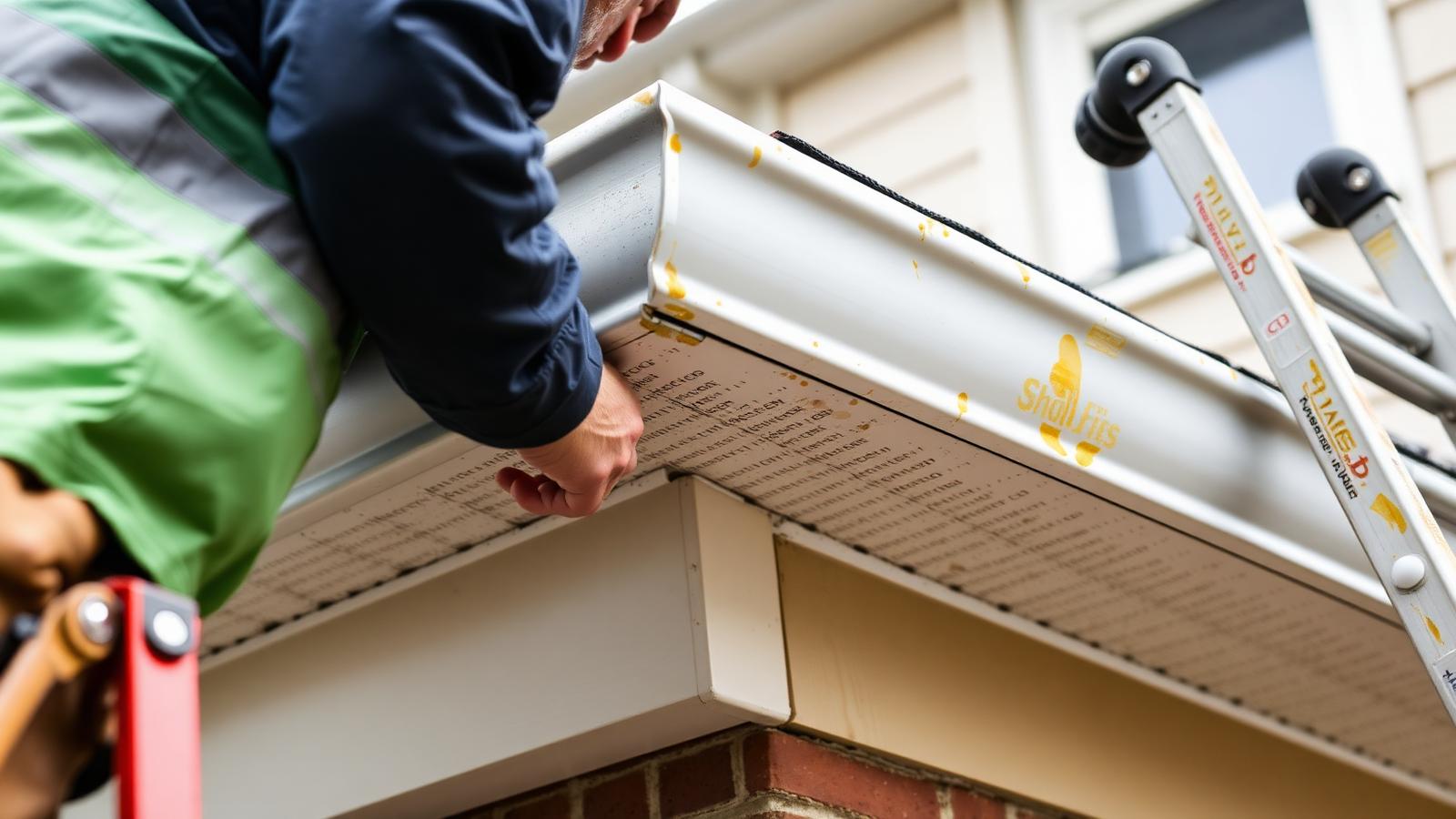
Eavestrough repair in Toronto costs $180 to $650 for common fixes — resealing seams, replacing hangers, re-pitching a run, or reattaching a downspout. Full replacement runs $9 to $16 per linear foot, so a typical Toronto semi at 120 feet lands between $1,100 and $1,900. Repair is worth it when the aluminum is sound and the problem is localized.
- Common Toronto repairs: seam reseal $180-$280, hanger replacement $220-$400, re-pitch a run $280-$450, downspout reattach $150-$300.
- Replacement makes more sense when more than a third of the run is damaged, or when the fascia behind it has already rotted.
- 5-inch K-style is standard in the GTA; switch to 6-inch on roofs with large drainage areas or chronic overflow.
- The real cost of ignoring it is basement water and foundation repair, which starts around $4,000 and climbs fast.
- Downspouts must discharge at least 6 feet from the foundation — most Toronto homes discharge at 2 to 3 feet.
Five signs your eavestroughs need repair now
Eavestroughs fail quietly. By the time water is visibly pouring over the front edge in a storm, the system has usually been underperforming for a couple of seasons. These are the signals worth acting on.
- Water sheeting over the front lip during rain. Either the trough is blocked or the pitch has flattened. Both are repairs, not replacements.
- Vertical staining or peeling paint on the fascia and soffit directly under a joint. That is a leaking seam, and the wood behind it is already wet.
- A visible sag or a wavy line along the run. Hangers have pulled out of the fascia, usually because the fascia board is soft.
- Soil erosion, a trench, or splash-back staining on the brick at a downspout outlet. The downspout is discharging too close to the wall.
- Ice damming and heavy icicles at the eaves in January. Partly an insulation issue, but a trough holding standing water freezes into a dam and tears itself off the fascia.
Eavestrough repair costs in Toronto, 2026
| Repair | Toronto price | Notes |
|---|---|---|
| Seam / joint reseal | $180 - $280 | Per joint area; cheaper bundled |
| Hanger or spike replacement | $220 - $400 | Depends on run length |
| Re-pitch a sagging run | $280 - $450 | Requires sound fascia |
| Downspout reattach or reroute | $150 - $300 | Add $60-$120 per extension |
| Section replacement (up to 20 ft) | $320 - $580 | Colour match is the variable |
| End cap / mitre corner repair | $140 - $240 | Corners leak first |
| Fascia board repair behind trough | $45 - $90 / ft | Only visible once trough is off |
| Full replacement, seamless 5" | $9 - $16 / linear ft | $1,100-$1,900 typical semi |
Two variables move these numbers more than anything else in Toronto: height and access. A three-storey Victorian with a rear addition and no side-yard clearance needs staging or a lift, which can double the labour line. A bungalow in Scarborough with clear grade on all four sides is the cheapest possible version of the same job.
Repair or replace? A simple decision rule
Contractors have an obvious incentive to recommend replacement. Here is the honest version of the calculation.
| Situation | Recommendation |
|---|---|
| 1-3 leaking joints, aluminum otherwise straight | Repair |
| Sagging in one run, fascia is solid | Repair — re-hang and re-pitch |
| More than a third of the total run damaged | Replace |
| Sectional (non-seamless) troughs over 20 years old | Replace with seamless |
| Chronic overflow on a large roof plane | Replace with 6-inch and add a downspout |
| Fascia rot behind multiple runs | Replace trough + fascia together |
| Galvanized steel, rusting through | Replace |
5-inch vs 6-inch: sizing for Toronto rainfall
Standard 5-inch K-style trough handles most GTA homes fine. It stops working when a single roof plane is large, steep, or fed by a valley that concentrates flow into one section. Toronto's short high-intensity summer storms overwhelm undersized systems in minutes, which is why the overflow always seems to happen in July rather than during a long autumn drizzle.
- 6-inch trough carries roughly 40% more water than 5-inch and pairs with a 3x4 downspout instead of 2x3.
- Add a downspout rather than upsizing when the run is long but flow is even — cheaper and equally effective.
- Steep roofs need larger capacity than their footprint suggests because water arrives faster with less time to enter the trough.
- Valleys that dump into a single trough section almost always need a diverter or a local upsize.
The downspout is half the system
Perfect eavestroughs feeding a badly placed downspout are still a failed system. In Toronto, the City requires downspout disconnection from the sanitary sewer in most areas, which means the water lands on your property and it is your problem where it goes.
- Discharge at least 6 feet from the foundation. Extensions cost $60 to $120 installed and prevent thousands in seepage repair.
- Grade the first 2 metres of soil away from the house at roughly 2 percent — about 5 cm of drop per metre.
- Never discharge onto a walkway or driveway that slopes back toward the house. In January that is an ice rink and a liability.
- Splash blocks are the minimum. A buried rigid extension to a pop-up emitter is the better answer where landscaping allows.
Maintenance that prevents most repairs
Toronto's mature tree canopy is the main enemy. Maples and oaks fill troughs with seed keys in spring and leaves in fall, which means two cleanings a year, not one.
- Clean in late spring after the seed drop and again in late November after the last leaves.
- Flush each downspout with a hose and confirm flow at the outlet, not just at the top.
- Check hangers every couple of years — spacing should be no more than 24 inches in the GTA snow load.
- Gutter guards reduce cleaning frequency but do not eliminate it; fine debris and shingle grit still settle.
- Look at the fascia, not just the trough. Soft or dark wood is the early warning that hangers will pull out.
60-minute callback. No obligation. GTA-wide.
Frequently asked questions
How much does eavestrough repair cost in Toronto?
Most common repairs run $180 to $650: a seam reseal is $180-$280, hanger replacement $220-$400, re-pitching a sagging run $280-$450, and a downspout reattach $150-$300. Section replacement up to 20 feet is $320-$580.
Is it cheaper to repair or replace eavestroughs?
Repair is cheaper and appropriate when the aluminum is sound and damage is localized to a few joints or one run. Once more than about a third of the system is failing, or the troughs are sectional and over 20 years old, replacement at $9-$16 per linear foot is the better value.
How long do eavestroughs last in the GTA?
Seamless aluminum lasts 20 to 30 years in Toronto's freeze-thaw climate. Galvanized steel lasts 15 to 20 before rust perforation. Copper lasts 50-plus but costs three to four times as much.
Why do my eavestroughs overflow even though they are clean?
Usually pitch or capacity. Either the run has flattened or reverse-pitched and water pools instead of flowing to the outlet, or 5-inch trough is undersized for a large or steep roof plane and needs 6-inch or an additional downspout.
Can eavestrough problems cause a wet basement?
Yes, and in the GTA it is the single most common cause. A downspout discharging within two feet of the wall saturates the soil at the footing during every storm. Extending discharge to six feet often resolves seepage without any foundation work.
How often should eavestroughs be cleaned in Toronto?
Twice a year on most Toronto properties — late spring after maple seed drop and late November after leaf fall. Homes without overhanging trees can usually manage with one annual cleaning.
Book this service in your area
Keep reading
- RoofingRoof Leak Repair in Toronto: Find the Source, Know the Cost, Stop the Damage
A ceiling stain almost never sits directly under the hole. Here is how professionals trace a Toronto roof leak, what it costs to fix, and why the flashing is guilty far more often than the shingles.
- GuttersEavestrough and Downspout Sizing for Toronto Rainfall (Complete Guide)
Most eavestrough failures in Toronto are sizing failures, not material failures. Here is the actual math behind 5-inch vs 6-inch gutter and 2x3 vs 3x4 downspouts, and what Toronto's rainfall intensity means for your roof.