
Chimney Flashing Repair: Why Caulk Always Fails and What Correct Flashing Looks Like
The joint between a brick chimney and a shingle roof is the leakiest 12 inches on a GTA home. Here's what correct flashing looks like, what it costs, and why the black goop on yours is a countdown timer.
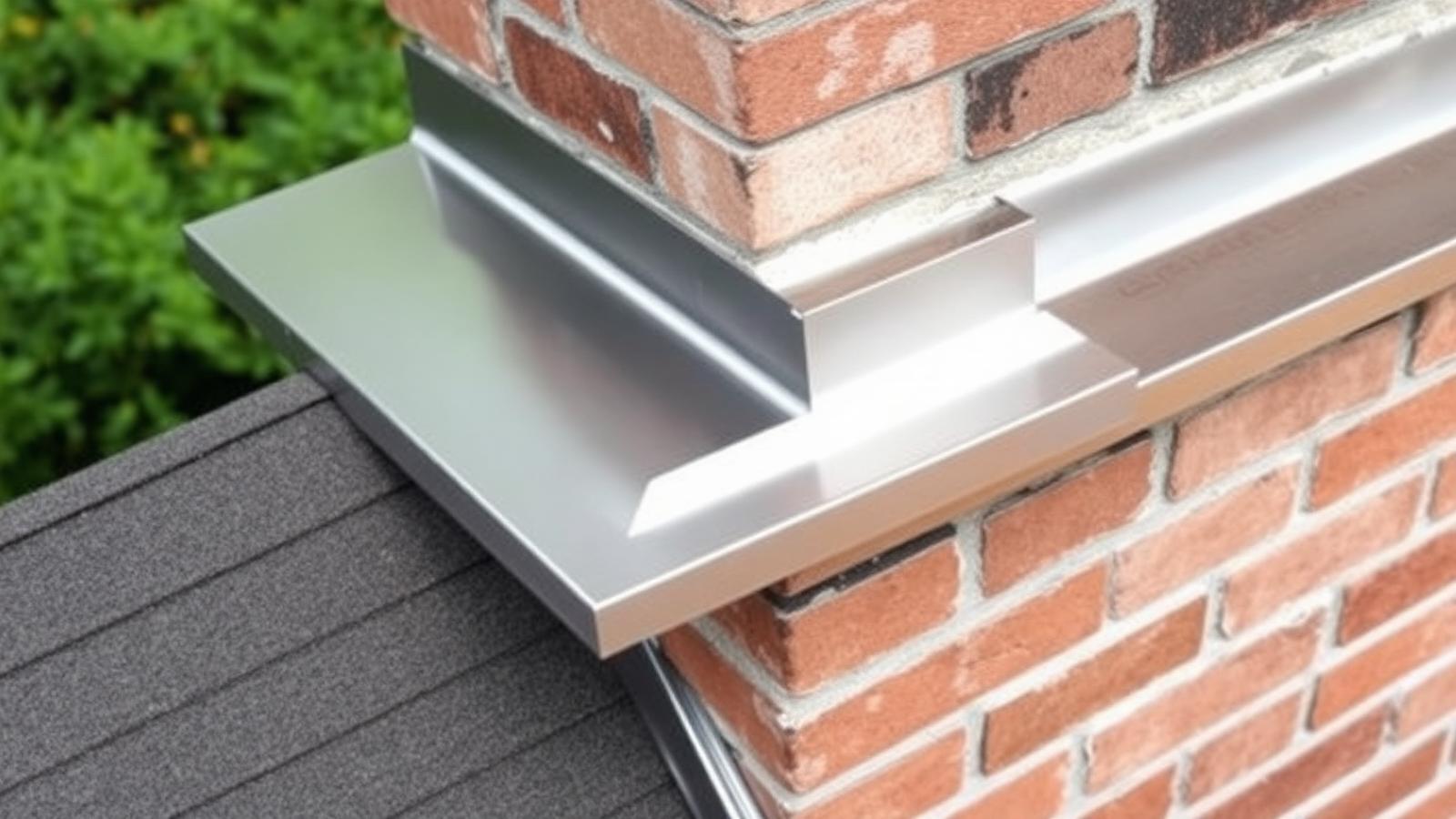
Chimney flashing repair costs $650 to $1,600 in the GTA. Correct flashing is two layers of metal: step flashing woven into each shingle course, and counter-flashing cut into a mortar reglet and folded over the step flashing. Roof cement or exterior caulk alone is a temporary patch that fails within three to seven Ontario winters.
- Flashing is a two-part system. One layer alone always leaks eventually.
- Counter-flashing must be cut into the mortar joint — surface-caulked counter-flashing is the most common defect in GTA housing.
- Black roof cement smeared at the chimney base is a repair, not a solution; budget for proper metal within a year or two.
- Aluminum is standard and fine; copper lasts longer but reacts with fresh mortar and needs correct isolation.
- A missing cricket on chimneys wider than 30 inches will keep causing leaks no matter how good the flashing is.
The anatomy of correct chimney flashing
A chimney is a rigid masonry column punched through a flexible roof plane. The two move independently — masonry expands and contracts differently from a wood-framed roof deck, and the whole assembly cycles through Ontario's freeze-thaw dozens of times each winter. No sealant survives that indefinitely. The only durable solution is overlapping metal that lets the two parts move while water still runs downhill and out.
Base flashing (apron)
An L-shaped metal piece at the downslope face of the chimney. One leg lies on the shingles, the other runs up the brick. It catches water coming down the roof toward the chimney and diverts it around.
Step flashing
Individual rectangular pieces of metal, one per shingle course, bent at 90 degrees and woven into the courses up each side of the chimney. Each piece overlaps the one below like shingles do. Critically, step flashing is never a single continuous piece of metal — that is a common shortcut and it fails because water tracks behind the top edge with nowhere to escape.
Counter-flashing
The second layer, and the one almost everyone gets wrong. A reglet — a groove roughly 25 mm deep — is cut into the mortar joint with a grinder. The top edge of the counter-flashing is folded and inserted into that groove, then wedged and sealed. It hangs down over the step flashing, so water running down the brick face is shed onto metal, not into the joint. Surface-mounting the counter-flashing to the brick face with caulk instead of cutting a reglet is fast, cheap, and guaranteed to leak once the caulk cures out.
The cricket (saddle)
A small peaked structure built on the upslope side of the chimney that splits water and snow around it. Building code requires one on chimneys wider than 30 inches measured across the slope. Countless GTA homes have a wide chimney with no cricket, and the result is a permanent snow and debris dam on the upslope face that no flashing can outlast.
Signs your chimney flashing has failed
- Water stains on the ceiling or wall near the chimney chase, especially after wind-driven rain rather than every rain.
- Damp, crumbling, or white-stained brick inside the attic where the chimney passes through.
- Rust streaks on the shingles below the chimney — the flashing itself is corroding.
- Visible gaps, lifted metal edges, or cracked caulk lines at the brick-to-metal joint.
- A musty smell near the fireplace, or damp firebox and rusty damper — water is coming down the chase.
- Peeling paint or blistered drywall on the wall that contains the chimney, on any floor.
Chimney flashing repair costs in the GTA, 2026
| Scope | GTA price |
|---|---|
| Reseal existing counter-flashing (temporary) | $250 - $450 |
| Replace counter-flashing only | $450 - $850 |
| Full step + counter-flashing, aluminum | $650 - $1,600 |
| Full flashing in copper | $1,400 - $3,200 |
| Add a cricket / saddle | $700 - $1,900 |
| Flashing + surrounding shingle replacement | $1,100 - $2,400 |
| Rotted sheathing repair (if found) | $120 - $220 per sheet |
| Steep or 3-storey access surcharge | +20% - 40% |
The honest way to read this table: the difference between the $250 reseal and the $900 proper job is about six years of service life and whether your roof deck stays dry. On a chimney you plan to keep, the cheap option is the expensive one.
Aluminum, steel, copper, or lead?
| Material | Life in GTA | Notes |
|---|---|---|
| Aluminum (0.019") | 25 - 30 yrs | Standard choice; corrodes if in direct contact with fresh mortar |
| Galvanized steel | 15 - 20 yrs | Cheapest; rust streaks are the failure signal |
| Copper (16 oz) | 50+ yrs | Best performance, 2-3x cost, patinas green |
| Lead-coated copper | 70+ yrs | Heritage and high-end work |
| Peel-and-stick membrane alone | 5 - 10 yrs | Underlayment, not a substitute for metal |
How to check yours from the ground
- Use binoculars or the zoom on your phone from the yard. Do not climb on a sloped roof for an inspection.
- Look for the horizontal line of the counter-flashing along the brick. If you can see a straight cut line into a mortar joint, that is a good sign.
- Look for a thick black or grey bead instead of a clean metal edge. That is roof cement.
- Check the upslope side for a peaked cricket if the chimney is wider than about 30 inches.
- Look for rust streaks running down the shingles from the flashing line.
- Then check the attic from inside, in daylight, for staining on the chimney masonry and the surrounding sheathing.
60-minute callback. No obligation. GTA-wide.
Frequently asked questions
How much does chimney flashing repair cost?
In the GTA, $650 to $1,600 for a full step and counter-flashing replacement in aluminum. Replacing counter-flashing alone is $450-$850, a temporary reseal is $250-$450, and copper flashing runs $1,400-$3,200.
Can I just caulk my chimney flashing?
Caulk buys you a season or two. Masonry and roof framing move at different rates through Ontario freeze-thaw cycles, so any sealant used as the primary barrier will crack. Caulk belongs as a secondary seal at the reglet, on top of correctly installed metal.
How long does chimney flashing last?
Properly installed aluminum lasts 25 to 30 years in the GTA, galvanized steel 15 to 20, and copper 50 or more. Surface-caulked flashing typically fails in three to seven winters.
Is chimney flashing repair covered by insurance?
Only when a sudden event caused it — a storm lifting the metal or a falling limb. Deterioration from age is treated as maintenance and excluded, though resulting interior damage is sometimes still covered. Report promptly and photograph before you mitigate.
What is a chimney cricket and do I need one?
A cricket is a small peaked saddle on the upslope side of a chimney that diverts water and snow around it. Code requires one on chimneys wider than 30 inches across the slope. Without it, snow and debris pile against the upslope face and defeat even good flashing.
Should I replace flashing when I replace my roof?
Yes. Flashing sits under the shingle courses, so reusing old flashing on a new roof means the weakest component in the assembly is also the oldest. Any reputable GTA roofer includes new chimney flashing in a re-roof quote.
Book this service in your area
Keep reading
- RoofingRoof Leak Repair in Toronto: Find the Source, Know the Cost, Stop the Damage
A ceiling stain almost never sits directly under the hole. Here is how professionals trace a Toronto roof leak, what it costs to fix, and why the flashing is guilty far more often than the shingles.
- ChimneyChimney Repair in Mississauga: What's Failing, What It Costs, and What to Fix First
Mississauga's 1970s-90s subdivisions are hitting the age where chimney crowns and mortar give out at once. Here's what each repair costs and which one actually stops the water.
- ChimneyChimney Repointing and Brick Repair: When It Is Urgent (GTA)
Crumbling mortar, flaking brick faces and a cracked crown are not always emergencies, but sometimes they are. Here is how a GTA mason tells the difference and what each repair level costs.